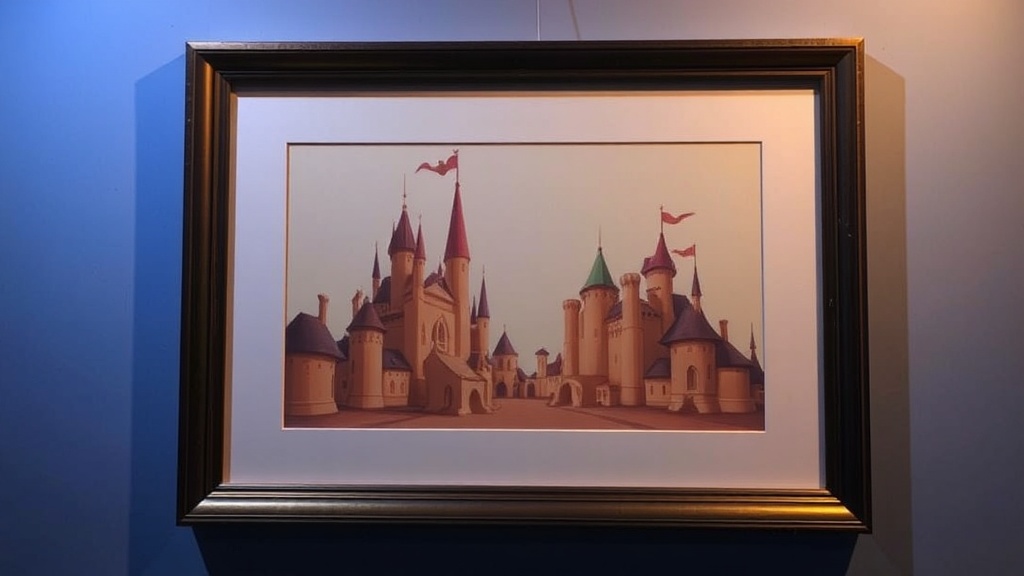
How to Frame and Preserve Vintage Disney Animation Cels

This post covers everything needed to frame and preserve vintage Disney animation cels without damaging them. Whether you recently acquired a hand-painted cel from The Little Mermaid or inherited a production piece from the golden age of animation, proper handling and display techniques will protect both the paint layer and the acetate substrate for decades.
What's the Best Way to Frame a Vintage Disney Animation Cel?
The best method involves using acid-free materials, UV-filtering glazing, and leaving space between the cel and the glass. Never press the acetate directly against any surface—that's a fast track to paint transfer, sticking, or permanent embossing. Instead, frame the cel like the museum piece it is.
Start with a four-ply, 100% cotton rag mat board (Bainbridge Alphamat or Crescent RagMat work well). The mat serves two jobs: it looks professional, and it creates that vital air gap. For the glazing, avoid regular picture glass. Tru Vue Museum Glass or Optium Museum Acrylic filter out 99% of UV rays while cutting glare. They're not cheap. Worth noting—you didn't spend $800 on a cel only to let sunlight bleach Sebastian's red shell into a sad pink blur.
The frame itself matters less than the components inside it, though solid wood or metal profiles from Nielsen Bainbridge provide stability. Here's a breakdown of framing materials ranked by how collector-friendly they are:
| Material | Safe for Cels? | Notes |
|---|---|---|
| 100% Cotton Rag Mat | Yes | Acid-free, lignin-free, buffers pollutants |
| Tru Vue Museum Glass | Yes | Excellent UV protection; heavy and breakable |
| Optium Museum Acrylic | Yes | Lightweight, anti-static, shatter-resistant |
| Regular Foam Board | No | Contains acids that off-gas and yellow acetate |
| Standard Window Glass | No | Zero UV filtering; allows fading and heat buildup |
| Pressure-Sensitive Tape | No | Adhesive creeps over time and stains irreversibly |
When assembling the frame, use Japanese paper hinges and wheat starch paste—not tape, not glue dots, not anything sticky from a craft store. The cel should be able to expand and contract slightly with humidity changes without tearing or pulling. If this sounds intimidating, professional framers who specialize in conservation framing (look for American Institute for Conservation guidelines) can handle the job. The catch? Not every framer has worked with acetate animation art, so ask directly about their experience with cels before handing over a 1950s Cinderella production piece.
Do Disney Animation Cels Fade in Sunlight?
Yes, and often faster than collectors expect. Disney cels were painted with industrial animation pigments—not lightfast artist oils—meant for scanning and projection, not decades under a living-room skylight. Colors like Hook Green, certain purples, and warm flesh tones are particularly vulnerable.
Direct sunlight is the obvious villain, but indirect daylight and even strong LED spots generate enough cumulative exposure to shift hues over time. UV-filtering glazing helps enormously. That said, it's not magic. Think of it as sunscreen, not a force field. The safest display spots are interior walls away from windows, with low ambient lighting and no spotlights aimed directly at the cel.
Here's the thing: heat matters just as much as light. A cel hung above a radiator or near a fireplace will develop waviness, paint cracking, and in extreme cases, vinegar syndrome in the acetate. (That's the chemical breakdown releasing acetic acid—same problem that afflicts old film reels.) If a room feels warm to the back of your hand, it's too warm for vintage animation art. Keep the display environment below 70°F (21°C) and relative humidity between 40% and 50%.
How Should Vintage Animation Cels Be Stored?
Stored cels belong flat, in the dark, in archival portfolios or Solander boxes—not rolled in tubes, not stacked under books, and definitely not in an attic or basement. Vertical storage in map cabinets works for framed pieces, but unframed cels need horizontal support to prevent gravity from pulling the paint layer over time.
For unframed cels, place each one inside an archival polyester sleeve (Mylar D or equivalent) with a sheet of acid-free museum board behind it. The sleeve protects against dust and fingerprints. The backing board prevents bending. Do not use PVC sleeves—the plasticizers outgas and can fuse with the acetate. Archival Methods and Light Impressions both sell suitable enclosures.
If you own multiple cels, interleave them with acid-free tissue. Avoid overfilling any box; pressure causes impressions. Label the outside with the film title, character, and year. Not only does this make finding a specific cel easier, it reduces unnecessary handling. Every time fingers touch a cel—gloved or not—there's risk.
Some collectors rotate their displayed pieces seasonally. It's a smart habit. A cel on the wall for six months can rest in storage for six months, cutting its cumulative light exposure in half. Storage isn't neglect. For delicate animation art, it's part of the preservation strategy.
Handling Cels Without Causing Damage
Always wear cotton gloves or nitrile gloves when handling raw cels. Oils from skin transfer easily to acetate and can etch the surface or lift paint. Support the entire sheet from underneath—never pinch a corner or grab by the unpainted margin. The painted layer is surprisingly brittle.
Inspect cels in diffuse daylight or with a color-corrected task lamp. Never use a magnifying glass under direct sun (heat concentration is real) and never spray any cleaning product near the cel. If dust settles on the surface, a gentle puff from a bulb blower (the kind used for camera sensors) is safer than wiping.
What Are the Most Common Mistakes Collectors Make?
The biggest errors are almost always well-intentioned: framing with regular craft-store supplies, hanging cels in bright rooms, and "cleaning" them with household products. Windex and acetate are mortal enemies. So are baby wipes, lens cloths with cleaning solution, and canned air held too close (the propellant can spit liquid onto the paint).
Another frequent mistake is assuming that because a cel looks fine now, it's stable. Paint can develop micro-cracks invisible to the naked eye. Acetate can start yellowing from the edges inward. Catching these issues early—through periodic, careful inspection—allows for intervention before the damage becomes catastrophic.
Some collectors also fall into the trap of over-restoring. A flaking paint area might tempt an owner to touch it up with acrylic craft paint. Don't. Altered cels lose value in the collector market and often look worse up close than honest, aged originals. For conservation repairs, consult a paper or film conservator. The Library of Congress Preservation Directorate offers publicly available guidance on finding qualified professionals.
Finally, documentation matters. Keep a record of purchase provenance, certificates of authenticity, and any conservation work performed. Should you ever sell or insure the piece—collectible insurance through a specialty provider like Collectibles Insurance Services is worth investigating for high-value items—this paperwork protects the financial side of the investment.
Vintage Disney animation cels are finite artifacts from an era of hand-crafted filmmaking. With the right framing, thoughtful display placement, and careful storage habits, these pieces of cinema history can remain vibrant for generations. The effort isn't elaborate. It's simply a matter of treating them with the same respect Disney's ink-and-paint artists did when they first laid brush to acetate.